
Title: Testosterone and Sleep: Why Poor Sleep Is Quietly Destroying Your Hormone Levels
If there is one lifestyle factor that has a more direct impact on testosterone than almost anything else — it is sleep.
If there is one lifestyle factor that has a more direct impact on testosterone than almost anything else — it is sleep.
Not stress. Not diet. Not exercise. Sleep.
Yet most conversations about low testosterone focus on symptoms, lab values, and treatment options. The connection between poor sleep and hormonal decline often goes unaddressed — and for men in Upstate South Carolina who are already dealing with the demands of work, family, and aging, it is a connection worth understanding clearly.
How Sleep Regulates Testosterone
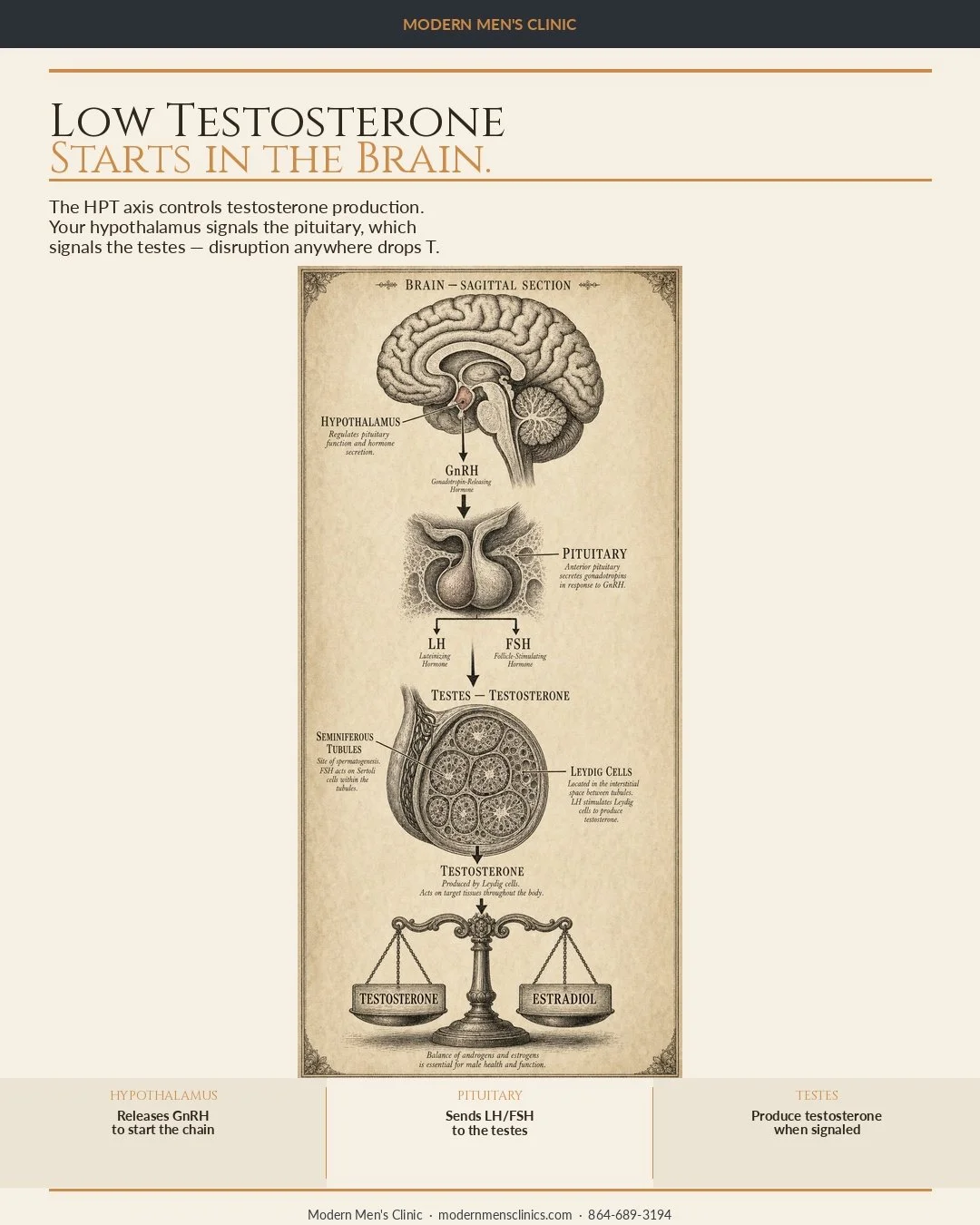
The majority of your daily testosterone is produced during sleep — specifically during REM and slow-wave sleep cycles. The pituitary gland releases pulses of luteinizing hormone (LH) during these stages, which signals the testes to produce testosterone.
When sleep is cut short, fragmented, or poor in quality, those pulses are disrupted. Studies have shown that men who sleep five hours or fewer per night can experience testosterone declines equivalent to 10 to 15 years of aging — within just one week of sleep restriction.
That is not a slow drift. That is a steep drop with measurable consequences.
The Bidirectional Problem
Here is what makes this particularly challenging: low testosterone also worsens sleep quality. Men with low T are more likely to experience:
- Difficulty falling asleep
- Frequent nighttime waking
- Reduced time in restorative sleep stages
- Sleep apnea (which further suppresses testosterone)
Low testosterone disrupts sleep. Poor sleep lowers testosterone. The two problems reinforce each other — and many men are caught in this cycle without recognizing it.
Sleep Apnea and Testosterone
Obstructive sleep apnea is significantly more common in men with low testosterone and excess body fat — two conditions that often occur together. During apnea events, oxygen levels drop and the body produces stress hormones that actively suppress testosterone production.
Men who are treated for sleep apnea frequently see improvements in testosterone levels even before beginning TRT. For some, addressing sleep apnea is a critical first step in hormone optimization.
What This Means for Your Treatment
At Modern Men's Clinic, we ask about sleep as part of every intake evaluation — because sleep quality is both a symptom of hormonal imbalance and a driver of it.
For some patients, improving sleep hygiene and addressing sleep apnea meaningfully impacts their hormonal picture. For others, restoring testosterone through TRT significantly improves sleep quality — often within the first few weeks of treatment.
Both pathways are real, and we assess each patient individually.
Serving Men in Anderson, Pickens, and Greenville Counties
Modern Men's Clinic is located in Piedmont, SC. If you are dealing with poor sleep alongside fatigue, weight gain, or other signs of low testosterone, a comprehensive evaluation can help identify what is actually driving your symptoms.
Sleep is not a luxury. It is when your body produces the hormones that make everything else work. Let's make sure yours is.
