
7 Signs You May Need Testosterone Replacement Therapy — And What to Do About It
Most men do not wake up one day and think, "I think my testosterone is low." Instead, it is a slow drift — a gradual erosion of the energy, strength, mood, and drive they once took for granted.
By the time most men walk through our door at Modern Men's Clinic, they have been living below their potential for years — often dismissing what they feel as stress, age, or just life.
“How did I get here”
Most men do not wake up one day and think, "I think my testosterone is low." Instead, it is a slow drift — a gradual erosion of the energy, strength, mood, and drive they once took for granted.
By the time most men walk through our door at Modern Men's Clinic, they have been living below their potential for years — often dismissing what they feel as stress, age, or just life.
Here are seven signs that what you are experiencing may be more than that.
1. You Are Exhausted — All the Time
Not tired after a long week. Bone-deep fatigue that does not respond to rest. If you are sleeping seven or eight hours and still waking up feeling like you barely slept, your hormones deserve a look.
Testosterone plays a direct role in energy metabolism. When levels drop, so does your ability to feel genuinely rested and alert.
2. Your Body Composition Has Shifted
More fat around the middle. Less muscle, even if you are still training. Testosterone is a key driver of both fat metabolism and muscle protein synthesis. When it drops, your body starts storing fat more efficiently — and building muscle becomes an uphill battle.
3. Your Sex Drive Has Faded
A reduced interest in sex is one of the most common early indicators of low testosterone. This is not about age — it is about hormone levels. Many men find that restoring testosterone to an optimal range significantly revives libido and sexual confidence.
4. Erections Are Less Reliable
Testosterone does not act alone in sexual function, but it is a major player. Difficulty achieving or maintaining erections — especially in the absence of cardiovascular disease or other known causes — is often tied to hormonal imbalance.
5. Your Mood Has Changed
Irritability, low motivation, mild depression, a sense of emotional flatness — these are real neurological symptoms of testosterone deficiency. If you find yourself feeling unlike yourself emotionally, it is worth ruling out a hormonal root cause before assuming it is purely psychological.
6. Brain Fog Is a Daily Reality
Struggling to focus? Finding it harder to retain information or think clearly? Testosterone has a direct impact on cognitive function. Many patients on TRT report that improved mental clarity was one of the first and most welcome changes they noticed.
7. You Have Lost Your Drive
Not just for sex — for life. The ambition, competitiveness, and sense of purpose that once felt natural have dulled. Testosterone influences motivation at a neurochemical level. Restoring healthy levels can help men feel re-engaged with their work, their relationships, and their goals.
What to Do Next
If this list describes you, the first step is a blood panel. Guessing is not a strategy, and no supplement will compensate for a true hormonal deficiency.
Modern Men's Clinic offers comprehensive lab-based hormone evaluations for men in Anderson, Pickens, and Greenville counties. We accept labs from your current provider (within 30 days) or can direct you to Tiger Diagnostics for initial testing.
From there, we review your results together, discuss your symptoms and goals, and — if appropriate — build a TRT protocol designed specifically for you.
You deserve to feel like yourself again. Let's find out what's in the way.
If you you are in the Upstate of South Carolina and would like to be evaluated please give us a call or become a patient off our contact page at www.modernmensclinics.com
Title: Testosterone and Sleep: Why Poor Sleep Is Quietly Destroying Your Hormone Levels
If there is one lifestyle factor that has a more direct impact on testosterone than almost anything else — it is sleep.
If there is one lifestyle factor that has a more direct impact on testosterone than almost anything else — it is sleep.
Not stress. Not diet. Not exercise. Sleep.
Yet most conversations about low testosterone focus on symptoms, lab values, and treatment options. The connection between poor sleep and hormonal decline often goes unaddressed — and for men in Upstate South Carolina who are already dealing with the demands of work, family, and aging, it is a connection worth understanding clearly.
How Sleep Regulates Testosterone
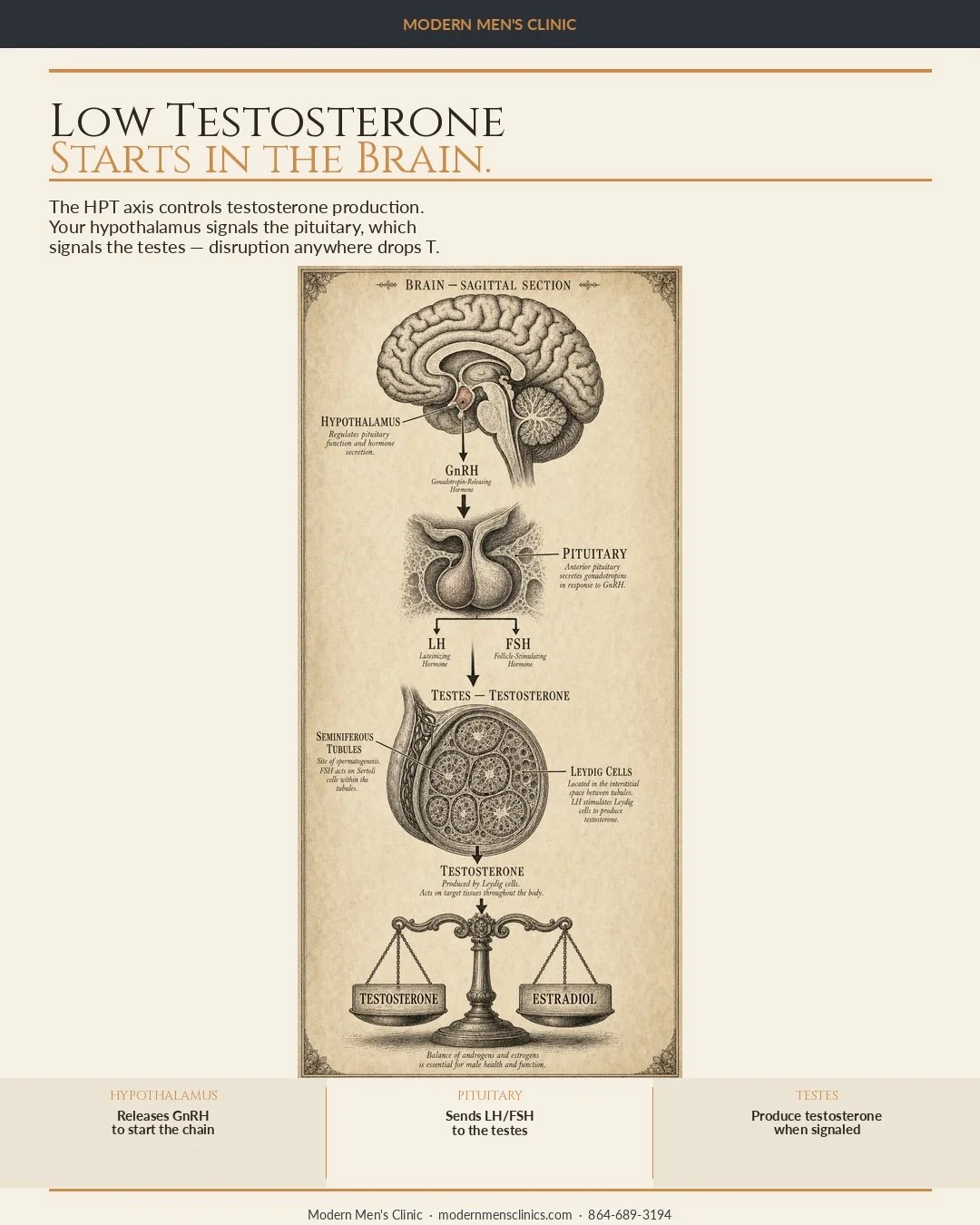
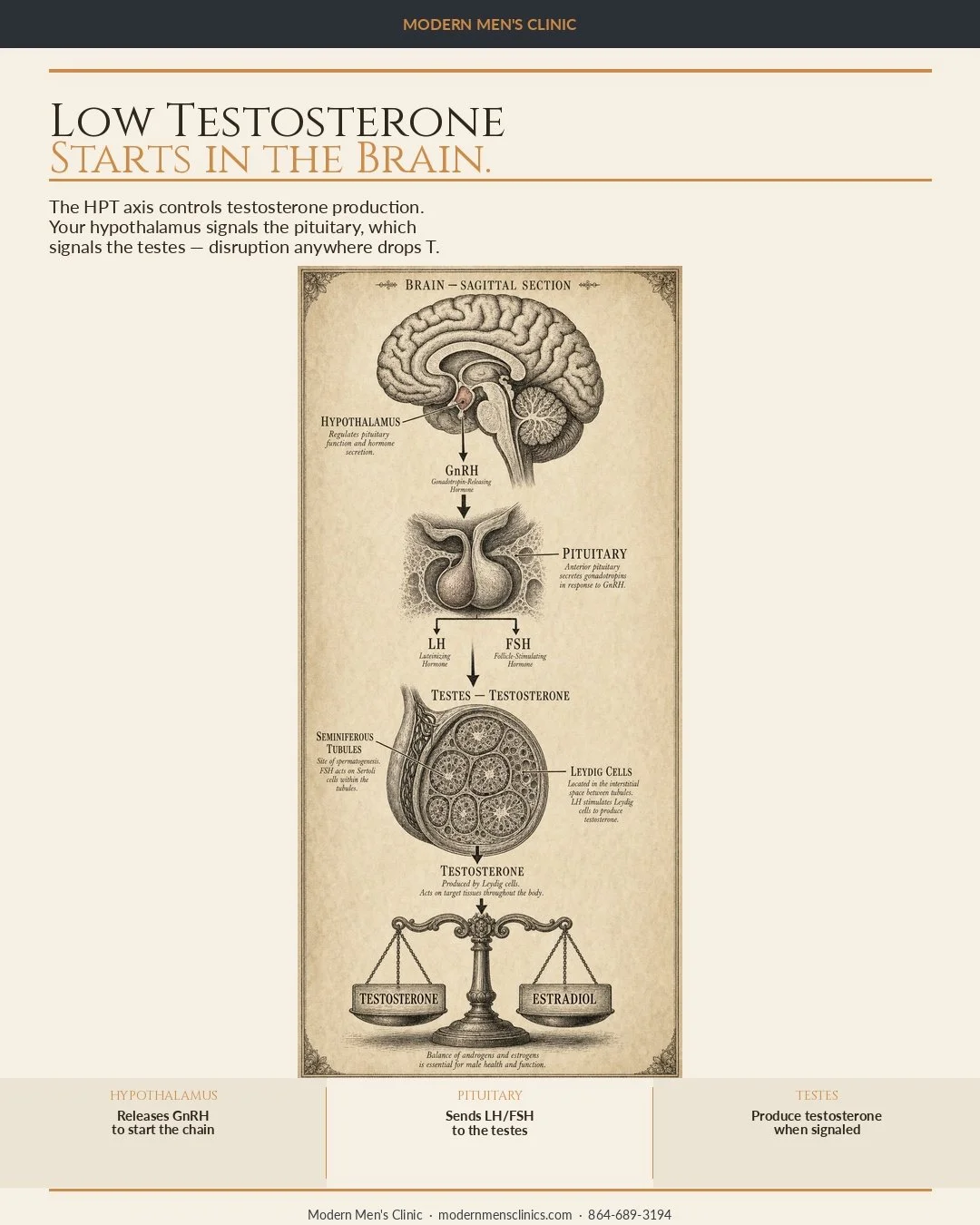
The majority of your daily testosterone is produced during sleep — specifically during REM and slow-wave sleep cycles. The pituitary gland releases pulses of luteinizing hormone (LH) during these stages, which signals the testes to produce testosterone.
When sleep is cut short, fragmented, or poor in quality, those pulses are disrupted. Studies have shown that men who sleep five hours or fewer per night can experience testosterone declines equivalent to 10 to 15 years of aging — within just one week of sleep restriction.
That is not a slow drift. That is a steep drop with measurable consequences.
The Bidirectional Problem
Here is what makes this particularly challenging: low testosterone also worsens sleep quality. Men with low T are more likely to experience:
- Difficulty falling asleep
- Frequent nighttime waking
- Reduced time in restorative sleep stages
- Sleep apnea (which further suppresses testosterone)
Low testosterone disrupts sleep. Poor sleep lowers testosterone. The two problems reinforce each other — and many men are caught in this cycle without recognizing it.
Sleep Apnea and Testosterone
Obstructive sleep apnea is significantly more common in men with low testosterone and excess body fat — two conditions that often occur together. During apnea events, oxygen levels drop and the body produces stress hormones that actively suppress testosterone production.
Men who are treated for sleep apnea frequently see improvements in testosterone levels even before beginning TRT. For some, addressing sleep apnea is a critical first step in hormone optimization.
What This Means for Your Treatment
At Modern Men's Clinic, we ask about sleep as part of every intake evaluation — because sleep quality is both a symptom of hormonal imbalance and a driver of it.
For some patients, improving sleep hygiene and addressing sleep apnea meaningfully impacts their hormonal picture. For others, restoring testosterone through TRT significantly improves sleep quality — often within the first few weeks of treatment.
Both pathways are real, and we assess each patient individually.
Serving Men in Anderson, Pickens, and Greenville Counties
Modern Men's Clinic is located in Piedmont, SC. If you are dealing with poor sleep alongside fatigue, weight gain, or other signs of low testosterone, a comprehensive evaluation can help identify what is actually driving your symptoms.
Sleep is not a luxury. It is when your body produces the hormones that make everything else work. Let's make sure yours is.
Title: Medical Weight Loss for Men Over 40: Why Willpower Is Not the Problem
“Is this just what I have to deal with now that I’m over 40”
You have tried eating less and moving more. You have cut carbs, gone to the gym, tracked your calories. And yet the weight — especially around your midsection — refuses to move in any meaningful way.
If this sounds familiar, here is what you need to hear: the problem is not your willpower. For many men over 40, the problem is biology.
Is this just what I have to deal with now that I’m over 40”
You have tried eating less and moving more. You have cut carbs, gone to the gym, tracked your calories. And yet the weight — especially around your midsection — refuses to move in any meaningful way.
If this sounds familiar, here is what you need to hear: the problem is not your willpower. For many men over 40, the problem is biology.
Why Weight Loss Gets Harder With Age
Several physiological shifts make weight loss increasingly difficult as men get older:
Declining Testosterone
Testosterone plays a direct role in fat metabolism and muscle preservation. As levels fall, the body becomes more efficient at storing fat — particularly visceral fat around the abdomen — and less efficient at building the lean muscle that burns calories at rest.
Insulin Resistance
As men age, cells can become less responsive to insulin, making it harder to process carbohydrates effectively and promoting fat storage.
Metabolic Slowdown
Resting metabolic rate declines with age and muscle loss. This means the same diet that kept a man lean at 30 can lead to steady weight gain by 45.
Hormonal Cascade Effects
Low testosterone leads to higher body fat, which increases estrogen conversion, which further suppresses testosterone. It is a cycle that becomes progressively harder to break without medical intervention.
What Is Medical Weight Loss?
Medical weight loss goes beyond diet advice and exercise plans. It uses clinically proven tools — lab work, metabolic assessment, and prescription medications — to address the biological barriers to fat loss that willpower simply cannot overcome.
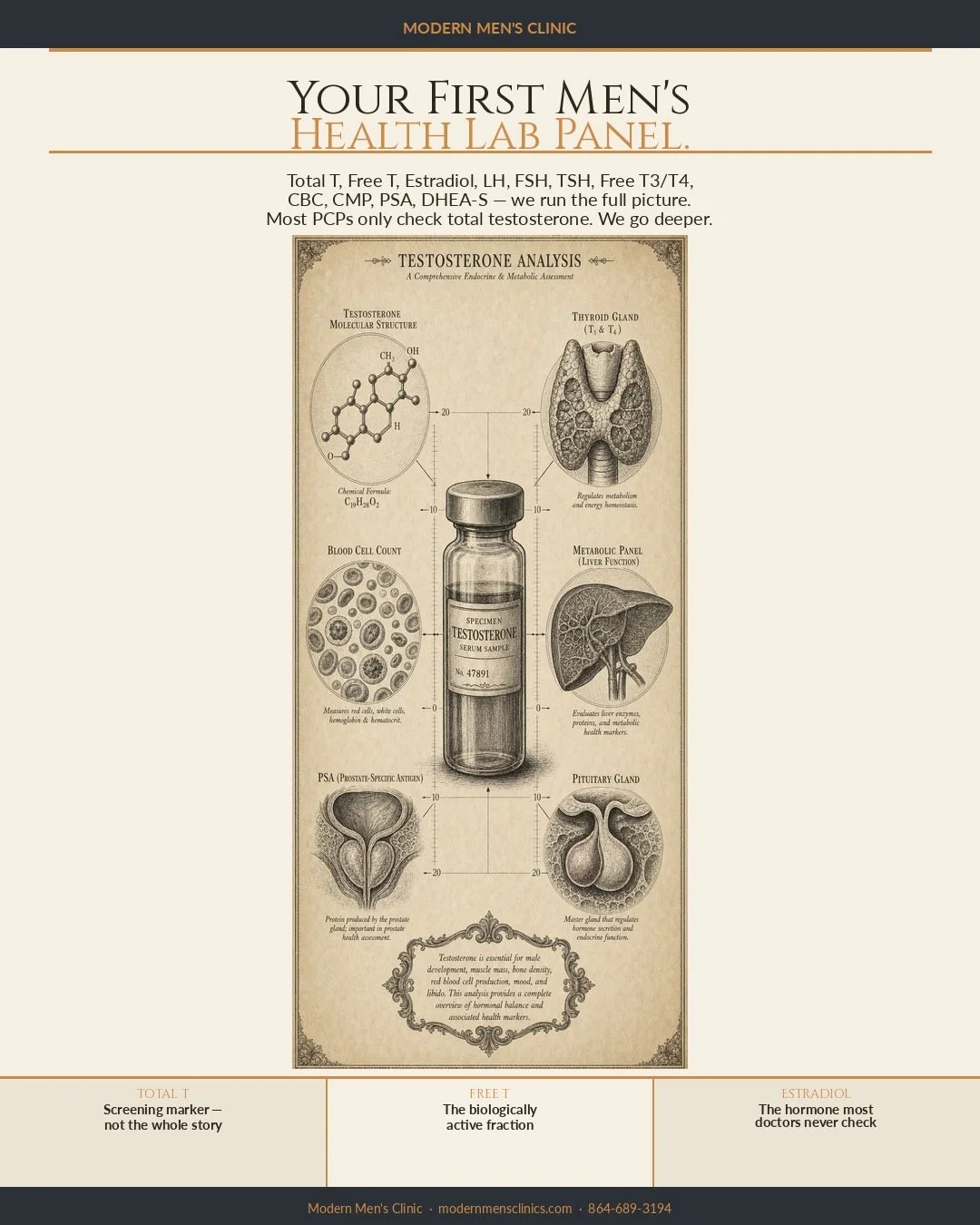
At Modern Men's Clinic, our medical weight loss program is built around each patient's unique metabolic profile. We begin with a comprehensive panel that includes:
- CMP with GFR
- CBC with differential
- TSH reflex to T4
- Hemoglobin A1c and insulin levels
- Lipid panel
- Vitamin B12
- DHEA
- And others if needed
This tells us what we are actually working with — and why your body has been resisting change.
GLP-1 Medications: A Game-Changer for Men
GLP-1 receptor agonists (like semaglutide and tirzepatide) are among the most effective medical weight loss tools available today. These medications work by reducing appetite, slowing gastric emptying for sustained fullness, improving insulin sensitivity, and directly supporting fat loss.
Medical weight loss programs at Modern Men's Clinic typically run four months to one year, depending on goals. GLP-1 medications are available at $250–$500 per month, with initial labs at $101 at the time of this blog post. Many of the labs you need for TRT and medial weight loss are the same.
The Testosterone Connection
One of the most overlooked aspects of men's weight loss is the relationship between testosterone and body composition. Many of our patients are dealing with both low T and stubborn weight — and these two problems are often feeding each other.
When we address both simultaneously, the results are significantly better than treating either one in isolation.
Modern Men's Clinic is located in Piedmont, SC, and serves Anderson, Pickens, and Greenville counties, with telehealth options available statewide.
If any of this sounds like you we would love to work with you just give us a call or fill out the become a client button found here.
What to Expect from Testosterone Replacement Therapy (TRT)
Starting testosterone replacement therapy is a significant decision. Many men begin TRT with high expectations, but understanding what actually happens—both short-term and long-term—is critical for success.
The First Few Weeks
During the initial phase, changes are often subtle:
Slight increase in energy
Improved mood
Better sleep quality
However, dramatic changes typically do not occur immediately.
1–3 Months
This is when more noticeable improvements begin:
Increased libido
Improved mental clarity
Enhanced motivation
Some men also begin to see early changes in body composition.
3–6 Months
Physical changes become more apparent:
Increased muscle mass
Reduced body fat
Improved exercise performance
Sexual function often continues to improve during this period.
6–12 Months
Longer-term benefits include:
Stabilized mood
Sustained energy levels
Improved metabolic health
Bone density improvements may also begin.
What TRT Does NOT Do
TRT is not:
An instant transformation
A substitute for diet and exercise
A cure-all for every health issue
Lifestyle still plays a major role in outcomes.
Monitoring and Adjustments
Successful TRT requires ongoing monitoring:
Testosterone levels
Hematocrit
Lipid profile
PSA (prostate health)
Dosing adjustments are common and necessary.
Potential Side Effects
Some men may experience:
Acne or oily skin
Increased red blood cell count
Fluid retention
Most side effects are manageable with proper care.
Adjunct Therapies
In some cases, additional treatments may be used alongside TRT:
Medications to maintain fertility
Estrogen management strategies
Lifestyle interventions
Psychological Expectations
One of the biggest challenges is managing expectations. TRT can improve quality of life, but it won’t:
Fix relationships
Eliminate all stress
Replace healthy habits
The Long-Term Perspective
TRT is typically a long-term commitment. Stopping therapy can lead to a return of symptoms unless underlying causes have been addressed.
Conclusion
When approached correctly, TRT can be a powerful tool for improving health and well-being. The key is realistic expectations, proper medical supervision, and a commitment to overall lifestyle improvement.
Symptoms of Low Testosterone in Men: What to Watch For
Low testosterone, or male hypogonadism, can affect nearly every aspect of a man’s physical and mental health. The challenge is that symptoms often develop gradually and can be mistaken for normal aging.
Physical Symptoms
1. Reduced Muscle Mass and Strength
Testosterone is essential for muscle protein synthesis. Low levels lead to:
Loss of muscle mass
Decreased strength
Slower recovery from exercise
2. Increased Body Fat
Particularly in the abdominal area, contributing to metabolic issues.
3. Low Energy and Fatigue
Persistent tiredness is one of the most common complaints.
4. Decreased Bone Density
Low testosterone increases the risk of osteoporosis and fractures.
Sexual Symptoms
1. Reduced Libido
A noticeable drop in sexual desire is often the earliest sign.
2. Erectile Dysfunction
While multifactorial, testosterone plays a key role in sexual function.
3. Reduced Morning Erections
A subtle but important indicator of hormonal health.
Mental and Emotional Symptoms
1. Brain Fog
Difficulty concentrating or remembering information.
2. Depression and Irritability
Mood changes are common but often overlooked.
3. Lack of Motivation
A decline in drive and ambition.
Sleep-Related Symptoms
Poor sleep quality
Difficulty falling or staying asleep
How Symptoms Progress
Symptoms often start subtly:
Mild fatigue
Slight decline in libido
Over time, they can evolve into:
Significant weight gain
Loss of confidence
Reduced quality of life
When to Seek Evaluation
Men should consider testing if they experience:
Persistent fatigue
Low libido
Unexplained mood changes
Decreased physical performance
Diagnosis Matters
A proper diagnosis requires both:
Clinical symptoms
Confirmed low testosterone levels via blood tests
Final Thoughts
Low testosterone is more than just a number on a lab report—it’s a condition that can significantly impact quality of life. Recognizing the symptoms early allows for timely intervention and better outcomes.
Conditions That Mimic Low Testosterone: Avoiding Misdiagnosis
Low testosterone is often blamed for a wide range of symptoms—fatigue, low libido, brain fog, and mood changes. However, many other medical and psychological conditions can produce nearly identical symptoms. Misdiagnosing these conditions as low testosterone can delay proper treatment and lead to poor outcomes.
Why Misdiagnosis Happens
The symptoms of low testosterone are nonspecific. They overlap with numerous other conditions, including:
Thyroid disorders
Depression
Sleep disorders
Nutritional deficiencies
Without proper lab testing and clinical evaluation, it’s easy to attribute symptoms to testosterone when another root cause is responsible.
Common Conditions That Mimic Low T
1. Hypothyroidism
An underactive thyroid can cause:
Fatigue
Weight gain
Depression
Reduced libido
Because thyroid hormones regulate metabolism, even mild dysfunction can feel like low testosterone.
2. Depression and Anxiety
Mental health conditions often present with:
Low energy
Lack of motivation
Reduced sexual interest
Cognitive difficulties
Unlike hormonal causes, these symptoms may fluctuate based on stress and life circumstances.
3. Sleep Apnea
Poor sleep quality can significantly reduce testosterone levels temporarily while also causing:
Daytime fatigue
Brain fog
Irritability
Treating sleep apnea often improves testosterone levels naturally.
4. Chronic Stress and Elevated Cortisol
High stress levels suppress testosterone production and can mimic low T symptoms. Chronic stress leads to:
Fatigue
Poor concentration
Reduced libido
5. Nutritional Deficiencies
Deficiencies in key nutrients like:
Vitamin D
Zinc
Magnesium
can impair hormone production and energy levels.
6. Obesity and Metabolic Syndrome
Excess body fat can lower testosterone levels while also independently causing fatigue, low energy, and reduced libido.
7. Medication Side Effects
Certain medications—such as antidepressants, opioids, and steroids—can suppress testosterone or mimic its deficiency.
The Importance of Proper Testing
A true diagnosis of low testosterone requires:
Multiple blood tests (morning levels)
Measurement of free and total testosterone
Evaluation of related hormones (LH, FSH, prolactin)
Symptoms alone are not enough.
A Smarter Approach
Before starting TRT, clinicians should:
Rule out reversible causes
Address lifestyle factors
Treat underlying conditions
In many cases, correcting the root issue restores testosterone levels without the need for lifelong therapy.
Conclusion
Not every case of fatigue or low libido is caused by low testosterone. A thorough evaluation is essential to avoid misdiagnosis and ensure patients receive the most effective treatment.
Testosterone Therapy and Cardiovascular Health: Risks, Benefits, and the Evolving Evidence
Testosterone replacement therapy (TRT) has long been viewed with caution when it comes to cardiovascular health. For years, clinicians worried that restoring testosterone levels might increase the risk of heart attack, stroke, or blood clots. However, more recent research has begun to challenge that narrative, suggesting a far more nuanced—and in some cases beneficial—relationship between testosterone and the cardiovascular system.
Understanding Testosterone’s Role in the Cardiovascular System
Testosterone is not just a reproductive hormone. It plays a critical role in multiple physiological systems, including:
Vascular tone and endothelial function
Lipid metabolism
Insulin sensitivity
Body composition (fat vs. lean mass)
Inflammation regulation
Low testosterone levels are frequently associated with conditions such as obesity, metabolic syndrome, and type 2 diabetes—all of which are major cardiovascular risk factors.
Low Testosterone as a Cardiovascular Risk Marker
Men with clinically low testosterone often present with:
Increased visceral fat
Reduced muscle mass
Insulin resistance
Elevated inflammatory markers
These factors contribute to a higher likelihood of developing atherosclerosis and cardiovascular disease. In fact, several observational studies have shown that men with low testosterone levels have higher all-cause and cardiovascular mortality rates.
What Does TRT Do to the Heart?
Modern evidence suggests that properly managed TRT may actually improve several cardiovascular risk markers:
1. Improved Body Composition
TRT can reduce visceral fat and increase lean muscle mass. This shift alone improves metabolic health and reduces strain on the cardiovascular system.
2. Better Insulin Sensitivity
Testosterone therapy has been shown to improve glucose metabolism, which is particularly beneficial for men with prediabetes or type 2 diabetes.
3. Lipid Profile Changes
While results vary, TRT often leads to:
Decreased total cholesterol
Modest reductions in LDL (“bad cholesterol”)
Variable effects on HDL (“good cholesterol”)
4. Reduced Inflammation
Chronic inflammation plays a key role in heart disease. TRT may lower inflammatory cytokines, contributing to improved vascular health.
5. Enhanced Endothelial Function
Testosterone helps blood vessels dilate more effectively, improving circulation and potentially lowering blood pressure.
Addressing the Controversy
Earlier studies raised alarms about TRT increasing cardiovascular risk, but many of these studies had significant limitations:
Inclusion of older, frail populations
Use of supraphysiologic doses
Poor monitoring protocols
More recent randomized controlled trials and meta-analyses have generally found that TRT does not increase cardiovascular risk when prescribed appropriately and may even reduce it in certain populations.
Who Benefits Most?
The cardiovascular benefits of TRT appear most pronounced in:
Men with confirmed hypogonadism
Those with metabolic syndrome
Individuals with insulin resistance or type 2 diabetes
However, TRT is not a universal solution. Patients must be carefully screened and monitored.
Potential Risks to Monitor
Even with newer data, TRT is not risk-free. Key concerns include:
Elevated hematocrit (thickened blood)
Fluid retention
Potential exacerbation of pre-existing heart conditions
Regular monitoring of blood counts, lipids, and cardiovascular markers is essential.
The Bottom Line
The outdated belief that testosterone therapy is inherently dangerous for the heart is being replaced by a more balanced understanding. For men with clinically low testosterone, TRT may offer meaningful cardiovascular benefits—particularly when combined with lifestyle improvements such as diet, exercise, and weight management.
What is TRT therapy and what is it not?
It all begins with an idea.
Before we cover what Testosterone therapy also know as TRT is lets cover what is not. TRT therapy is a steroid hormone that mimics naturally occurring steroids produced in our bodies. But unlike steroids found in the gray or black market its given at the levels to replace a deficiency TRT therapy is not doing steroids. Its replacing philologically low levels in the body.
How is TRT given? TRT can given in multiple ways including intra-muscular or injections under the skin done every day or few days, pellets inserted under the skin every few months, creams/gels placed daily, or dissolvable/under the tongue medications taken daily.
TRT is said by some to make you feel that you have drank from the fountain of youth. Some would think that everyone should take it then. Like any medication it contains some side affects and is not appropriate for every one. To make sure this is a good fit for your health, personal goals, and life style its important to be evaluated by a medical professional. This includes initial and follow up lab work, dosage adjustments, and at times side effect mediation. If you belive you suffer from low testosterone symptoms please reach out to us as we would love to set you up for lab work and go over your options.

What is the ADAM questionnaire?
It all begins with an idea.
The Androgen Deficiency in the Aging Male (ADAM) questionnaire is a 10-question, self-report screening tool designed to identify symptoms of low testosterone (hypogonadism) in men. It acts as a non-invasive, preliminary check, often used for identifying low libido, fatigue, or mood changes, but it does not provide a definitive diagnosis. This test allows us to make sure you have symptoms of low testosterone and help guide your care to appropriate therapy.
Key points of the ADAM questionnaire
Purpose: Quickly find men who may have low testosterone.
Accuracy: High sensitivity (88%) but lower specificity (60%).
How it’s scored: A test is "positive" if the person answers "Yes" to question 1 (low libido) or question 7 (weaker erections), or "Yes" to any other three questions.
Symptoms checked (10 items)
Lower sex drive
Low energy
Less strength or endurance
Lost height
Less enjoyment of life
Feeling sad or irritable
Weaker erections
Worse sports ability
Falling asleep after dinner
Decline in work performance
If you have answered yes to 3 questions or answered yes to questions 1 or 7 please reach out. We would love to draw some initial lab work to see if we can’t find a cause for how you feel.
