
7 Signs You May Need Testosterone Replacement Therapy — And What to Do About It
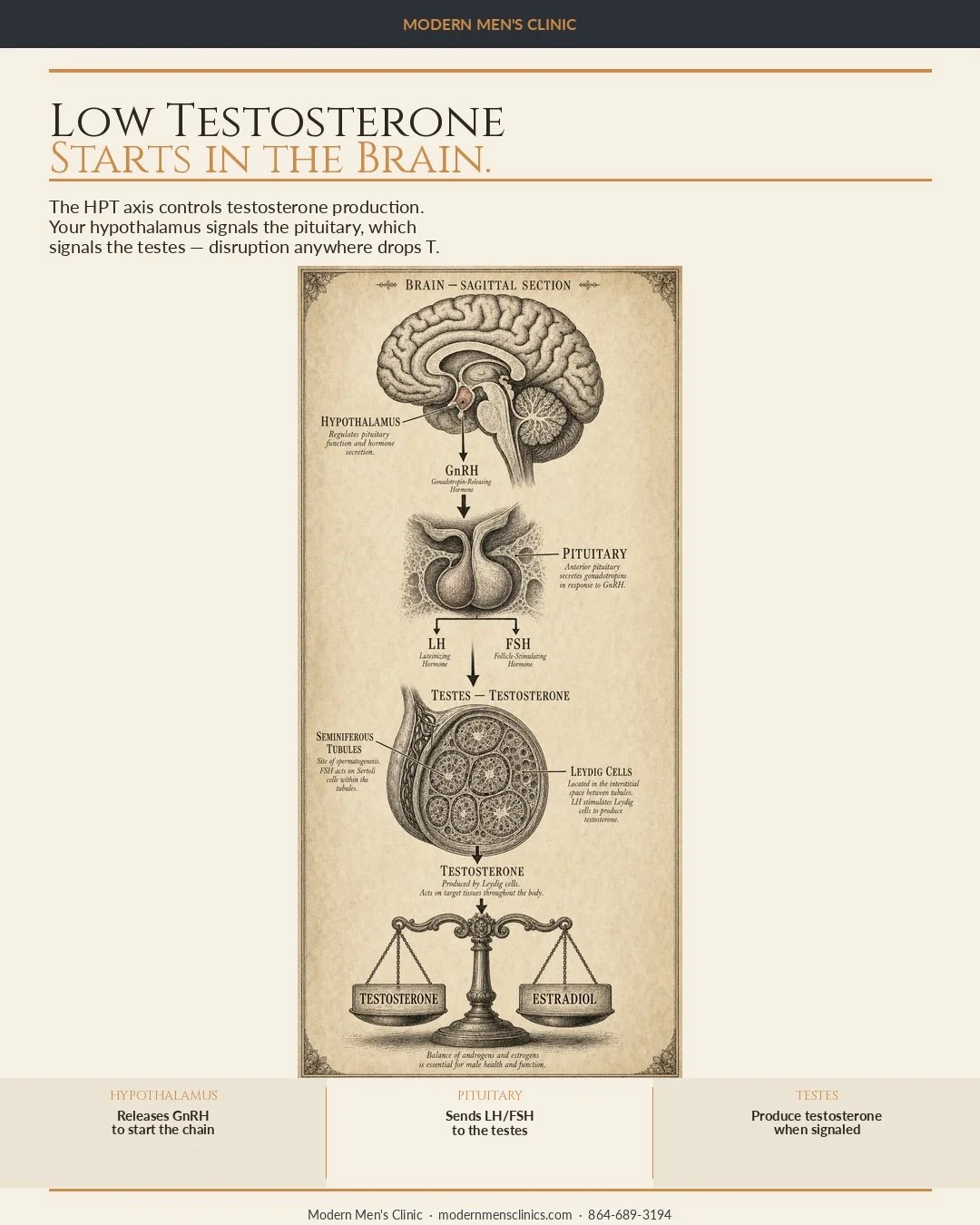
Most men do not wake up one day and think, "I think my testosterone is low." Instead, it is a slow drift — a gradual erosion of the energy, strength, mood, and drive they once took for granted.
By the time most men walk through our door at Modern Men's Clinic, they have been living below their potential for years — often dismissing what they feel as stress, age, or just life.
“How did I get here”
Most men do not wake up one day and think, "I think my testosterone is low." Instead, it is a slow drift — a gradual erosion of the energy, strength, mood, and drive they once took for granted.
By the time most men walk through our door at Modern Men's Clinic, they have been living below their potential for years — often dismissing what they feel as stress, age, or just life.
Here are seven signs that what you are experiencing may be more than that.
1. You Are Exhausted — All the Time
Not tired after a long week. Bone-deep fatigue that does not respond to rest. If you are sleeping seven or eight hours and still waking up feeling like you barely slept, your hormones deserve a look.
Testosterone plays a direct role in energy metabolism. When levels drop, so does your ability to feel genuinely rested and alert.
2. Your Body Composition Has Shifted
More fat around the middle. Less muscle, even if you are still training. Testosterone is a key driver of both fat metabolism and muscle protein synthesis. When it drops, your body starts storing fat more efficiently — and building muscle becomes an uphill battle.
3. Your Sex Drive Has Faded
A reduced interest in sex is one of the most common early indicators of low testosterone. This is not about age — it is about hormone levels. Many men find that restoring testosterone to an optimal range significantly revives libido and sexual confidence.
4. Erections Are Less Reliable
Testosterone does not act alone in sexual function, but it is a major player. Difficulty achieving or maintaining erections — especially in the absence of cardiovascular disease or other known causes — is often tied to hormonal imbalance.
5. Your Mood Has Changed
Irritability, low motivation, mild depression, a sense of emotional flatness — these are real neurological symptoms of testosterone deficiency. If you find yourself feeling unlike yourself emotionally, it is worth ruling out a hormonal root cause before assuming it is purely psychological.
6. Brain Fog Is a Daily Reality
Struggling to focus? Finding it harder to retain information or think clearly? Testosterone has a direct impact on cognitive function. Many patients on TRT report that improved mental clarity was one of the first and most welcome changes they noticed.
7. You Have Lost Your Drive
Not just for sex — for life. The ambition, competitiveness, and sense of purpose that once felt natural have dulled. Testosterone influences motivation at a neurochemical level. Restoring healthy levels can help men feel re-engaged with their work, their relationships, and their goals.
What to Do Next
If this list describes you, the first step is a blood panel. Guessing is not a strategy, and no supplement will compensate for a true hormonal deficiency.
Modern Men's Clinic offers comprehensive lab-based hormone evaluations for men in Anderson, Pickens, and Greenville counties. We accept labs from your current provider (within 30 days) or can direct you to Tiger Diagnostics for initial testing.
From there, we review your results together, discuss your symptoms and goals, and — if appropriate — build a TRT protocol designed specifically for you.
You deserve to feel like yourself again. Let's find out what's in the way.
If you you are in the Upstate of South Carolina and would like to be evaluated please give us a call or become a patient off our contact page at www.modernmensclinics.com
Title: Medical Weight Loss for Men Over 40: Why Willpower Is Not the Problem
“Is this just what I have to deal with now that I’m over 40”
You have tried eating less and moving more. You have cut carbs, gone to the gym, tracked your calories. And yet the weight — especially around your midsection — refuses to move in any meaningful way.
If this sounds familiar, here is what you need to hear: the problem is not your willpower. For many men over 40, the problem is biology.
Is this just what I have to deal with now that I’m over 40”
You have tried eating less and moving more. You have cut carbs, gone to the gym, tracked your calories. And yet the weight — especially around your midsection — refuses to move in any meaningful way.
If this sounds familiar, here is what you need to hear: the problem is not your willpower. For many men over 40, the problem is biology.
Why Weight Loss Gets Harder With Age
Several physiological shifts make weight loss increasingly difficult as men get older:
Declining Testosterone
Testosterone plays a direct role in fat metabolism and muscle preservation. As levels fall, the body becomes more efficient at storing fat — particularly visceral fat around the abdomen — and less efficient at building the lean muscle that burns calories at rest.
Insulin Resistance
As men age, cells can become less responsive to insulin, making it harder to process carbohydrates effectively and promoting fat storage.
Metabolic Slowdown
Resting metabolic rate declines with age and muscle loss. This means the same diet that kept a man lean at 30 can lead to steady weight gain by 45.
Hormonal Cascade Effects
Low testosterone leads to higher body fat, which increases estrogen conversion, which further suppresses testosterone. It is a cycle that becomes progressively harder to break without medical intervention.
What Is Medical Weight Loss?
Medical weight loss goes beyond diet advice and exercise plans. It uses clinically proven tools — lab work, metabolic assessment, and prescription medications — to address the biological barriers to fat loss that willpower simply cannot overcome.
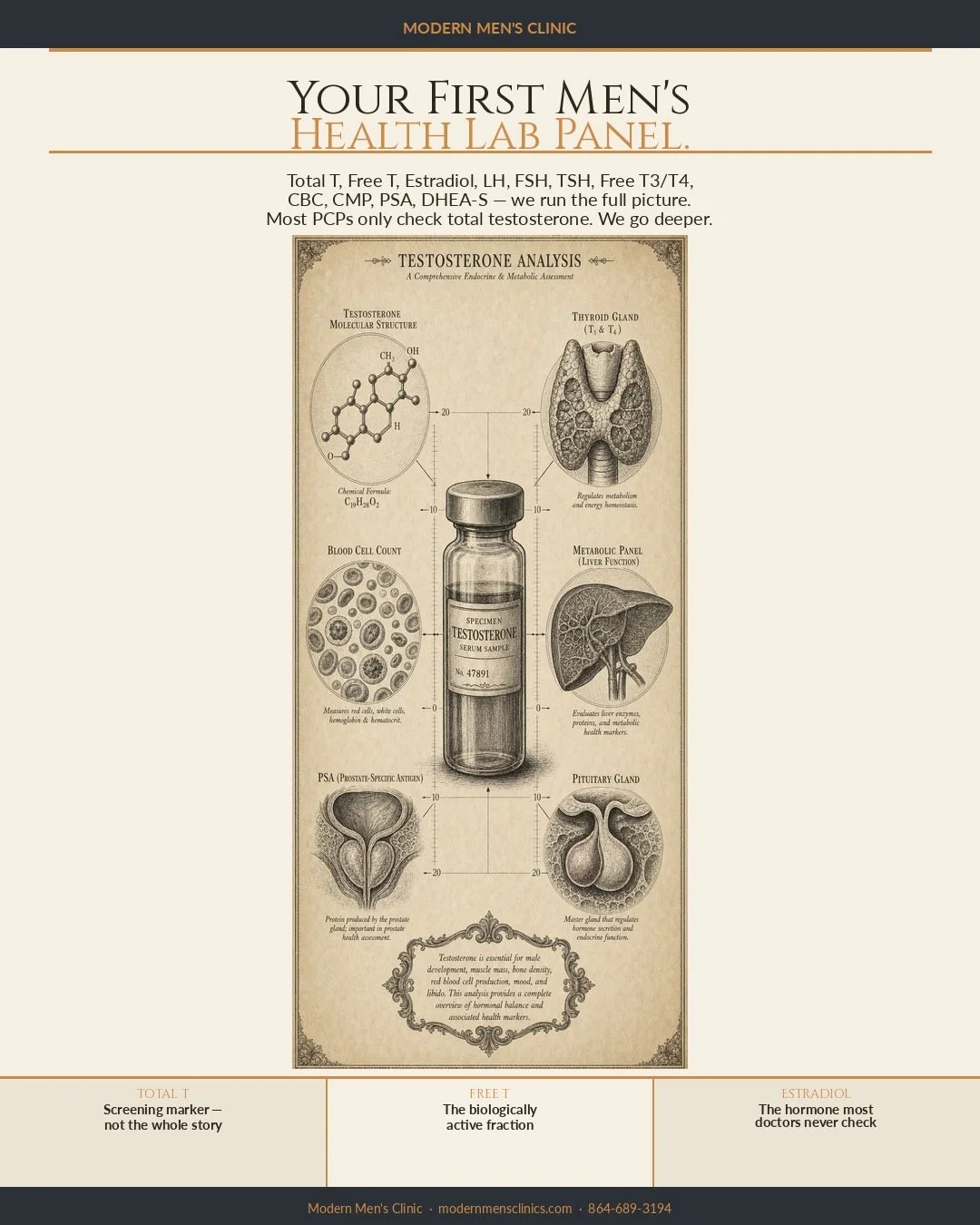
At Modern Men's Clinic, our medical weight loss program is built around each patient's unique metabolic profile. We begin with a comprehensive panel that includes:
- CMP with GFR
- CBC with differential
- TSH reflex to T4
- Hemoglobin A1c and insulin levels
- Lipid panel
- Vitamin B12
- DHEA
- And others if needed
This tells us what we are actually working with — and why your body has been resisting change.
GLP-1 Medications: A Game-Changer for Men
GLP-1 receptor agonists (like semaglutide and tirzepatide) are among the most effective medical weight loss tools available today. These medications work by reducing appetite, slowing gastric emptying for sustained fullness, improving insulin sensitivity, and directly supporting fat loss.
Medical weight loss programs at Modern Men's Clinic typically run four months to one year, depending on goals. GLP-1 medications are available at $250–$500 per month, with initial labs at $101 at the time of this blog post. Many of the labs you need for TRT and medial weight loss are the same.
The Testosterone Connection
One of the most overlooked aspects of men's weight loss is the relationship between testosterone and body composition. Many of our patients are dealing with both low T and stubborn weight — and these two problems are often feeding each other.
When we address both simultaneously, the results are significantly better than treating either one in isolation.
Modern Men's Clinic is located in Piedmont, SC, and serves Anderson, Pickens, and Greenville counties, with telehealth options available statewide.
If any of this sounds like you we would love to work with you just give us a call or fill out the become a client button found here.
